


The Accountability Myth: Why Role Clarity Outweighs Job Titles in High-Performance Teams.
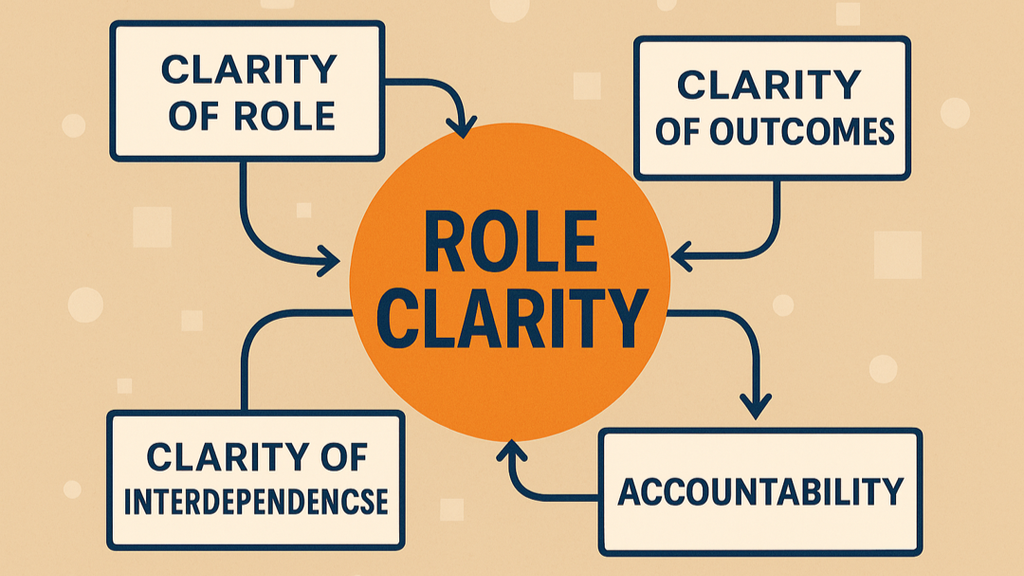
Accountability is one of the most overused words in business.
In leadership meetings, it’s often invoked like a magic fix — “We need more accountability in this team.” But when you dig deeper, what’s really missing isn’t the willingness to be accountable… it’s clarity about what exactly people are accountable for.
Over the past months, in my conversations with CEOs, CHROs, and functional leaders, I’ve noticed a consistent pattern: teams rarely fail because people don’t care — they fail because roles, decision rights, and expectations are fuzzy. Accountability without role clarity is like a compass without a map: it points somewhere, but gives no way to know if you’ve arrived.
This is where organizational structure — something I explored in our last Candid Core issue, “Why Organization Structure Is Your Company’s Nervous System” — becomes critical. Structure is the nervous system, but role clarity is the signal. Without both, even the most talented teams misfire.
Why This Matters More Than Ever
In that earlier article, I argued that structure should be reviewed every 12–18 months to keep it agile and aligned with purpose. But structure alone isn’t enough.
Even with a flawless org chart, if people don’t know exactly what they own, accountability becomes an illusion.
Research underscores this:
- A McKinsey study found that teams with clear role definitions are 53% more likely to deliver on strategic priorities.
- Gallup reports that only 60% of employees know what’s expected of them — leaving 40% in a fog of assumption.
The Hidden Cost of Fuzzy Roles
The symptoms of low role clarity often masquerade as performance issues:
- Slow decisions because no one knows who has the final say
- Duplicate efforts because responsibilities overlap
- Missed opportunities because crucial tasks fall through the cracks
- Frustrated talent because high performers feel under-utilized or misaligned
Leaders often respond with calls for “more accountability”, performance improvement plans, or even reorganizations. But unless the root cause — unclear roles and expectations — is addressed, the same problems resurface.
Job Titles Don’t Equal Role Clarity
Job titles create assumptions. “Head of Marketing” might sound self-explanatory, but does it include brand strategy, product launches, customer insights — or all three? Titles tell you where someone sits in the hierarchy, not the boundaries or priorities of their role.
I’ve seen organizations where two leaders had the same title but entirely different scopes — one with a global strategic mandate, the other with a regional operational remit. Without explicit clarity, even seasoned executives step on each other’s toes or leave gaps unfilled.
Role Clarity vs. Job Titles

Clarity Creates Confidence
When leaders are explicit about roles, decision rights, and success measures, teams gain three critical advantages:
- Speed – Decisions happen faster because ownership is clear.
- Alignment – Everyone knows how their work fits into business priorities.
- Trust – Less second-guessing and territory-protecting because responsibilities are transparent.
Clarity doesn’t mean rigidity. In fact, it’s what enables agility — teams can flex and adapt precisely because they know their starting boundaries.
🔍 A Self-Reflection Tool for Leaders: The Role Clarity Dipstick

Action for Business Leaders & HR Professionals
- Map roles to outcomes — not just job descriptions
- Clarify decision rights — avoid the “everyone thought someone else would do it” trap
- Review and refresh — role clarity should evolve with your strategy
- Train managers to have clarity conversations, not just performance reviews
The Bottom Line
Titles will always matter for recognition and structure. But in high-performance teams, role clarity is the invisible architecture that keeps execution tight, collaboration smooth, and accountability real.
If you’re leading a team — or designing one — start with clarity. The titles can wait.
Closing Thought
In business, accountability isn’t about the title on your email signature — it’s about the outcomes you own.
Job titles create perception. Role clarity creates performance.
If your org chart is your nervous system, then role clarity is the signal strength between the neurons. Weak signals slow the whole body. Strong signals make it agile, responsive, and high-performing.
If you suspect your team’s accountability signals are fuzzy, now’s the time to tune them — before the next strategy meeting ends with more questions than answers.
💡 I help leaders and HR teams diagnose and strengthen role clarity as part of broader organizational design. If this article resonated, let’s have a conversation.